Why There Are So Many Bible Translations
Many Christians eventually ask a simple but important question: if the Bible is God's Word, why are there so many different translations? Is one more accurate than the others? And can we really trust that what we're reading today reflects what was originally written?
These questions aren't new, and they're not signs of doubt. They're the natural result of caring about Scripture and wanting to understand it well. To answer them, we have to step back and look at how the Bible was written, preserved, and passed down through history.
The Bible Was Not Written in English
The first thing to understand is that the Bible was not originally written in English. The Old Testament was written primarily in Hebrew, with small sections in Aramaic. The New Testament was written in Greek. That alone explains why translation is necessary.
Languages do not work like math equations. Words and phrases rarely map perfectly from one language to another. Every language carries idioms, cultural assumptions, and figures of speech that don't transfer cleanly. Translating Scripture has always required wisdom, context, and interpretation.
This isn't a modern problem. Long before English existed, Scripture was already being translated.
Translation Is Biblical
One of the earliest and most important Bible translations was the Septuagint, a Greek translation of the Hebrew Scriptures produced by Jewish scholars several centuries before Jesus. Greek had become the common language of the Mediterranean world, and the Scriptures were translated so ordinary people could understand them.
What's significant is that the New Testament authors frequently quote the Septuagint rather than the original Hebrew. In other words, Scripture itself treats translated Scripture as authoritative. Translation was not seen as corruption of God's Word, but as a way of making God's Word accessible.
Jesus and the Septuagint
One of the clearest examples of why Bible translation matters comes directly from Jesus Himself. When Jesus summarizes the greatest commandment, He says we are to love the Lord our God with all our heart, soul, mind, and strength.
What's interesting is that this fourfold wording doesn't come straight from the Hebrew text of Deuteronomy 6. In the Hebrew, the command emphasizes heart, soul, and strength. The word mind appears when that passage is translated into Greek in the Septuagint.
"Love the Lord your God with all your heart and with all your soul and with all your strength."
Deuteronomy 6:5
When Jesus quotes this command in the Gospels, He follows the Septuagint wording, not the Hebrew phrasing. In other words, Jesus is comfortable using a translated version of Scripture-even when it expands the wording slightly to clarify meaning for His audience.
That matters. It shows that Jesus is not threatened by faithful translation. He doesn't insist on quoting Scripture only in its original language. Instead, He affirms that God's Word can be communicated accurately and authoritatively across languages.
This reinforces an important point: translation is not a modern compromise. It is baked into the story of Scripture itself. The authority of God's Word is not lost when it is faithfully translated-it is made accessible.
How the Bible Was Preserved Over Time
Before printing presses, every copy of Scripture was written by hand. Scrolls and letters were copied, shared, and circulated among synagogues and churches. This might sound risky, but it actually resulted in an enormous number of manuscripts.
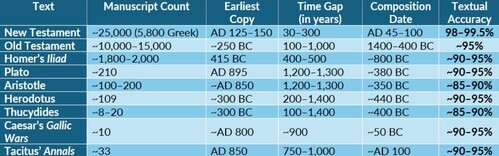
For the New Testament in particular, we possess thousands of manuscript copies, many of them dating very close to the original events. When scholars compare these manuscripts, they find extraordinary agreement. Differences exist, but they are overwhelmingly minor-spelling, word order, or grammar-and they do not affect core Christian doctrine.
The discovery of the Dead Sea Scrolls in the 20th century reinforced this reliability. These manuscripts were over a thousand years older than the previously available Old Testament copies. When compared, the texts were strikingly consistent.
The Isaiah Scroll is often highlighted because it is approximately 95% identical to later manuscripts copied centuries afterward. The differences that do exist are largely insignificant. This level of preservation across such a long span of time is remarkable.